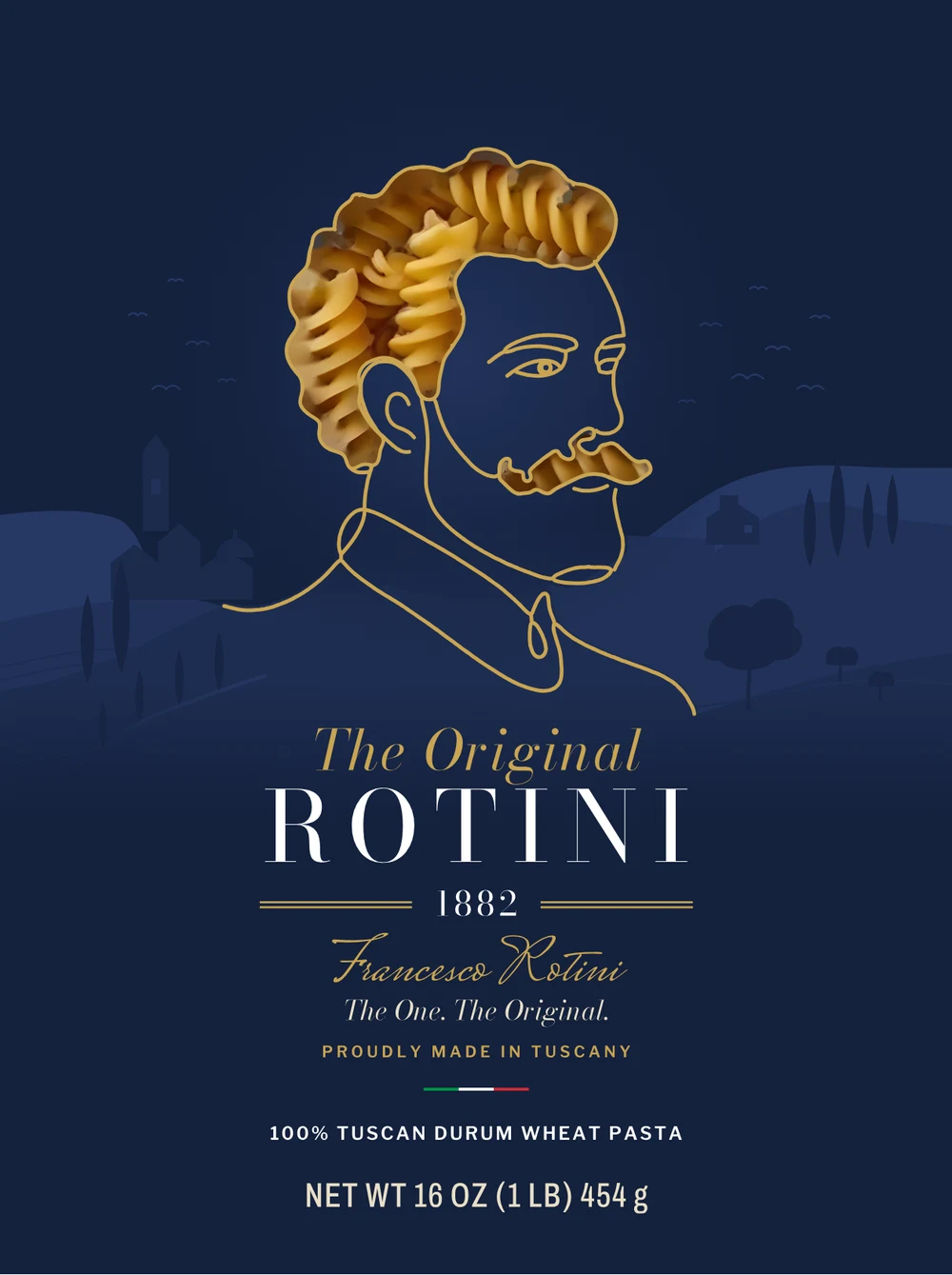
The Original
The One. The Original.
Our giant rotini, the one that started it all.
ROT001

The One. The Original.
Everyone knows rotini. I am Rotini.
Everyone knows rotini.
But I am Rotini.
Rotini is a pasta shape on every American shelf. It is also our family name, the one that, as our family tells it, Francesco Rotini carried from Tuscany to America in 1882. Everyone else just has the name. We have the family name.

A single line of gold draws Francesco Rotini as he left Tuscany in 1882. The curls come from the family story: his first son, Joey, born in Brooklyn, had beautiful curls. Where they should be, the box opens, and the giant fusilloni inside become his hair.

The Original, the Giant and the Colors of Italy: the same family spiral, in three boxes.

Our giant rotini, the one that started it all.
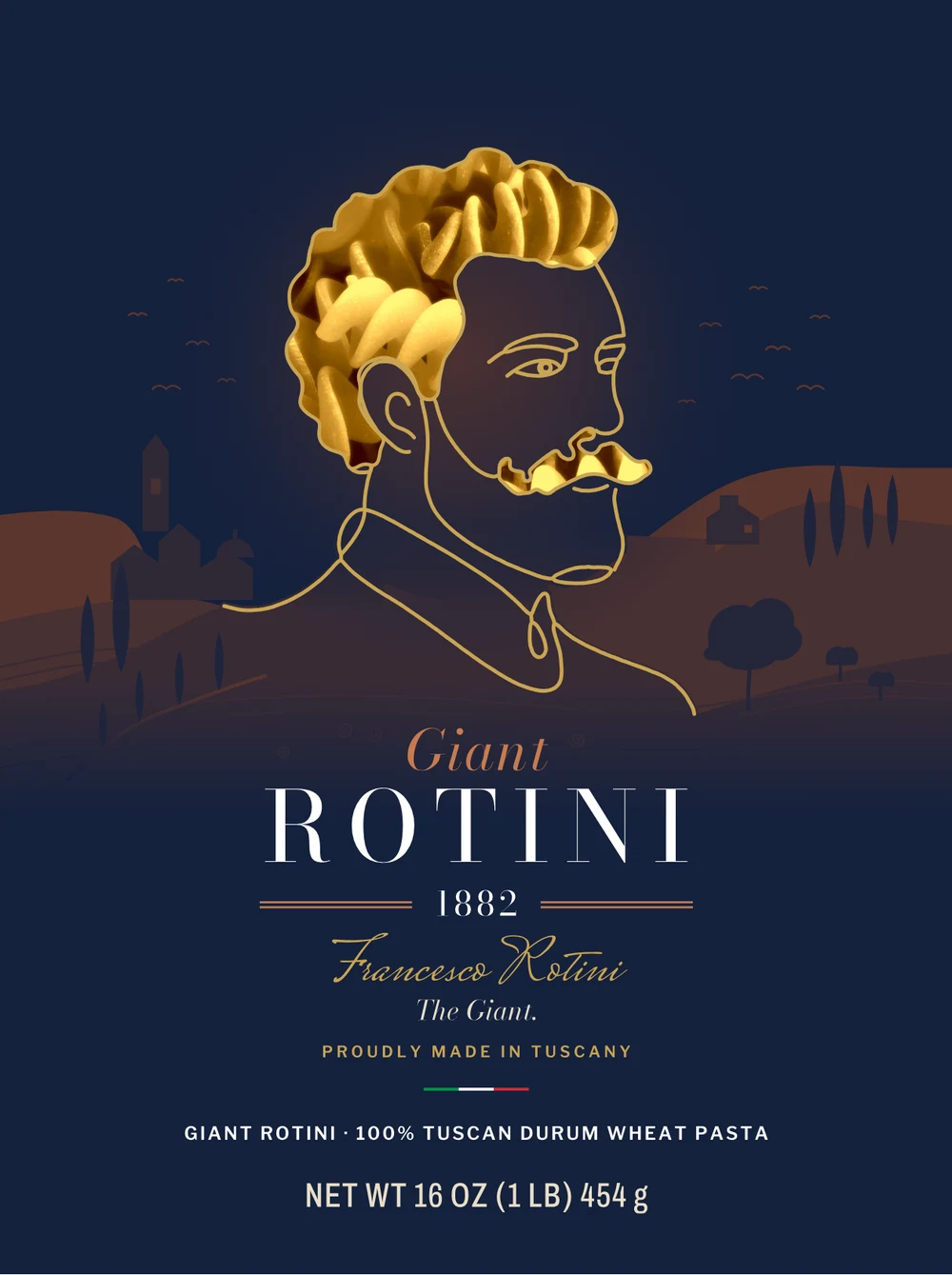
A bigger, bolder spiral that holds every drop of sauce.
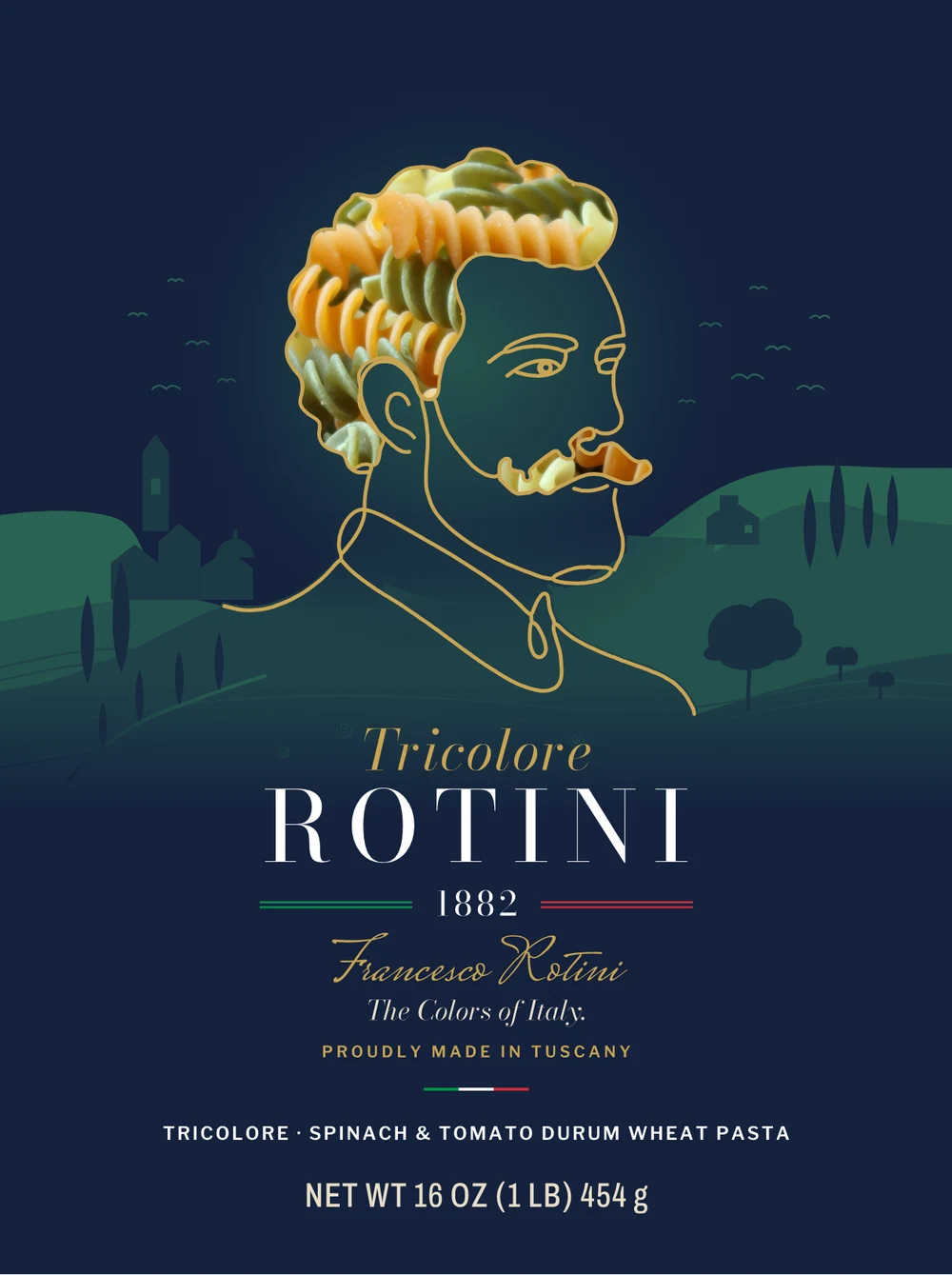
Spinach, natural and tomato: the colors of Italy, one spiral at a time.
Each 1 lb (454 g). Same bronze-cut craft, made in Tuscany.
In our family, this story has never been written down. It has been handed down from generation to generation, at the table, and we tell it the way it was told to us: as a family legend. What every generation has shared is the same thing: a passion for food, and for this pasta adventure.
As the family tells it, Francesco Rotini, a young farmer from the hills of Tuscany, left for America carrying little more than his name. He settled in Brooklyn, "Broccolino" to the Italian immigrants. Exactly where, we don't know.
There, the story goes, he opened a small pasta workshop and made a pasta in his own image: a wheel that turns and never ends. Rotini, like his name.
In Brooklyn his first son was born. Like so many immigrants, Francesco gave him an American name: Joey. Joey Rotini had beautiful curls, and those curls are where the idea for our box was born.
After the early 1900s the trail goes quiet. The family believes he came home to Italy, leaving his Brooklyn workshop behind.
Livio Rotini grew up with these stories, told by his grandfather and his father. After many years in Italian food and olive oil, he decided the story deserved more than the dinner table.
He brought Francesco's wheel back to life, here in Tuscany.
The name kept turning too: Francesco, then Francesco, then Francesco. Great-great-grandfather, great-grandfather, grandfather.
Livio is not the end of the story. He is the next turn of the wheel. And the turn after that already has a name: Francesco.
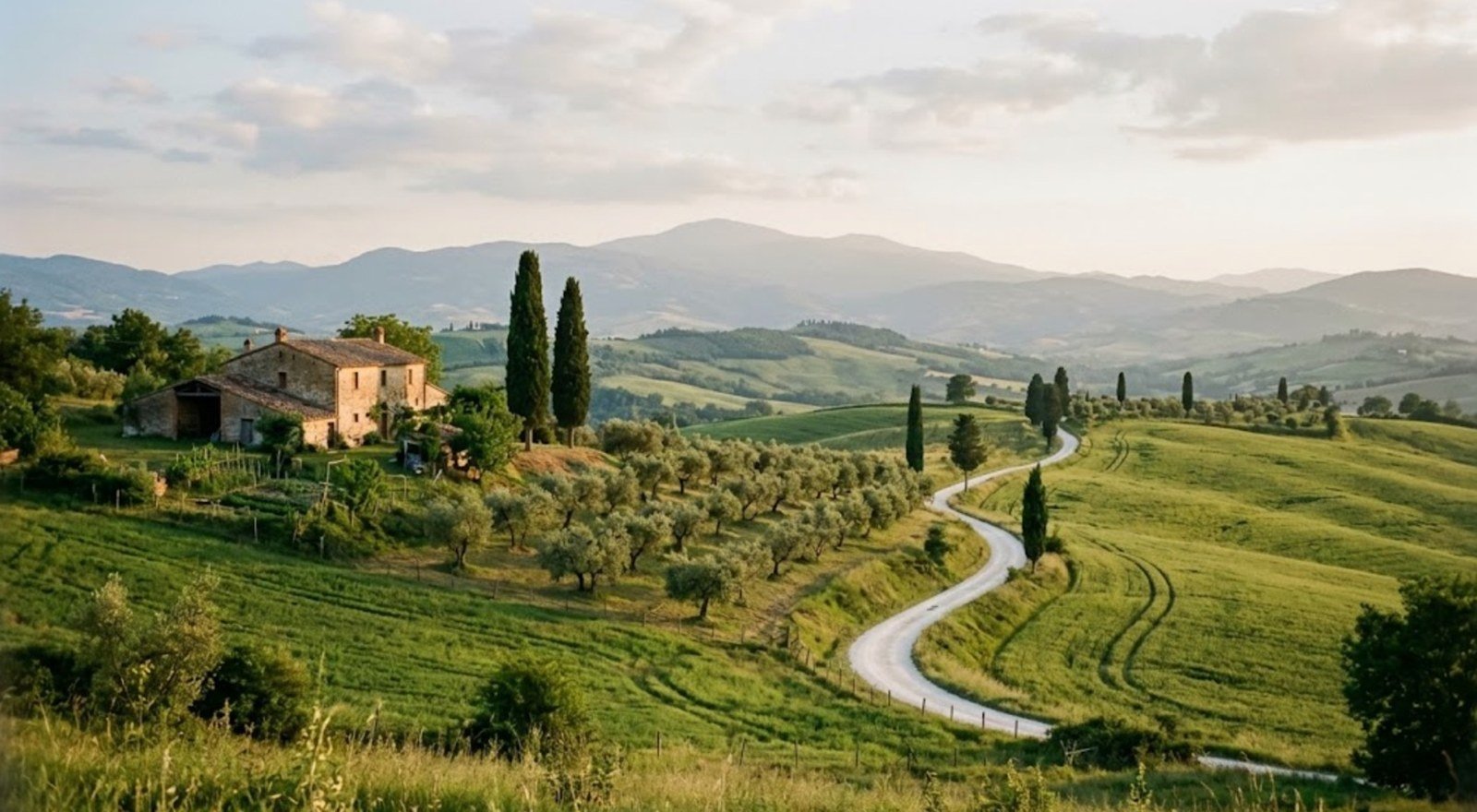
A family legend, handed down by word of mouth and never documented. The surname, and the passion for food, are the parts nobody had to tell us: we were born with them.
The same wheat and the same craft, in three shapes and colors.
«A tavola non s'invecchia.»
At the table, nobody grows old. — Italian proverb
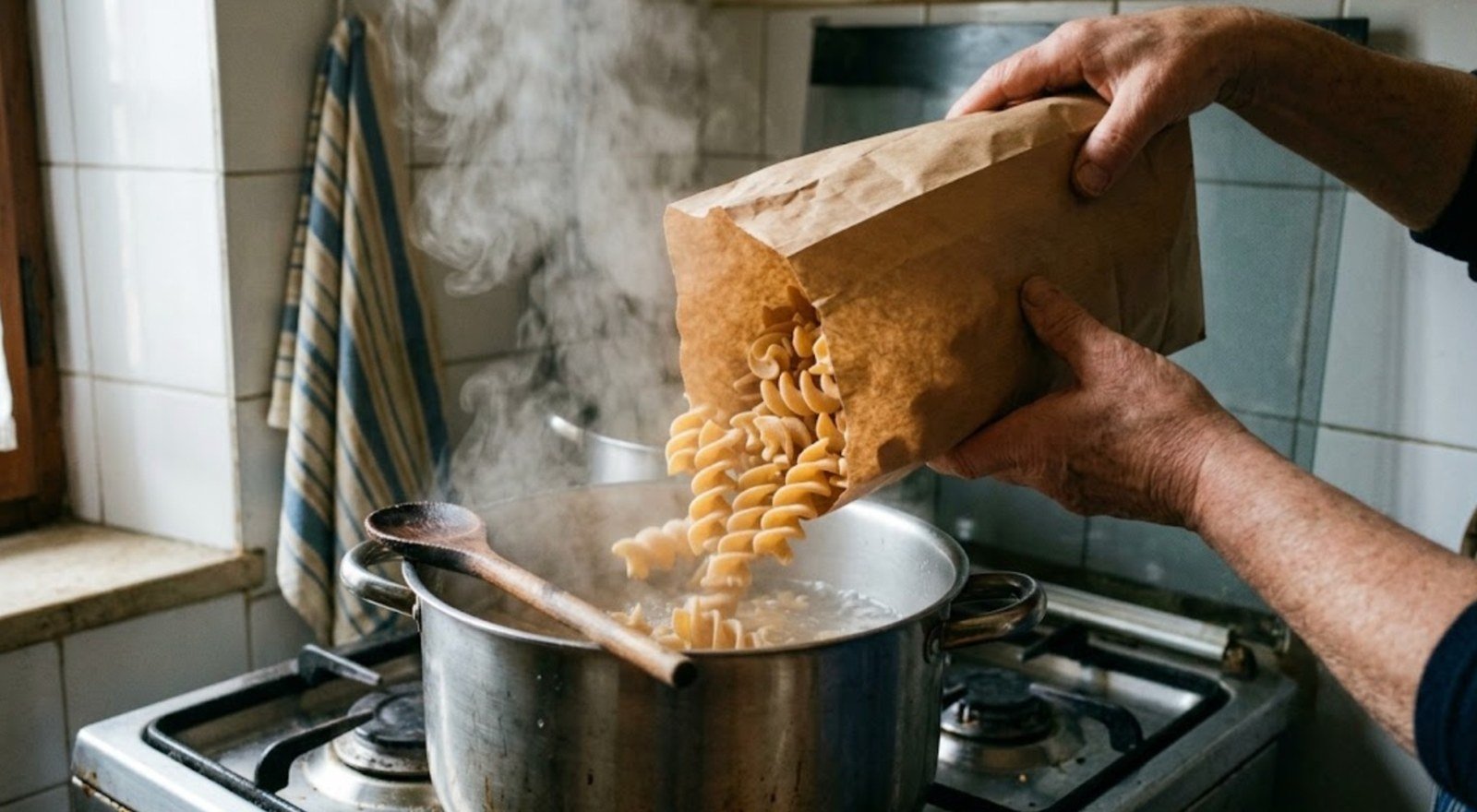
Fusilloni need room to turn. Bring 5 quarts of water to a rolling boil for the whole box.
Two tablespoons of coarse salt once the water boils. No oil in the water.
Pour in the pasta and stir right away, so the spirals don't stick together.
8 minutes for al dente, 10 for well cooked (The Original and Tricolore). The Giant needs a little longer: follow the time on its box. Taste before you drain: ready when the center is still firm.
Save a cup of pasta water, drain, then toss the fusilloni in the sauce with a splash of that water for one minute.
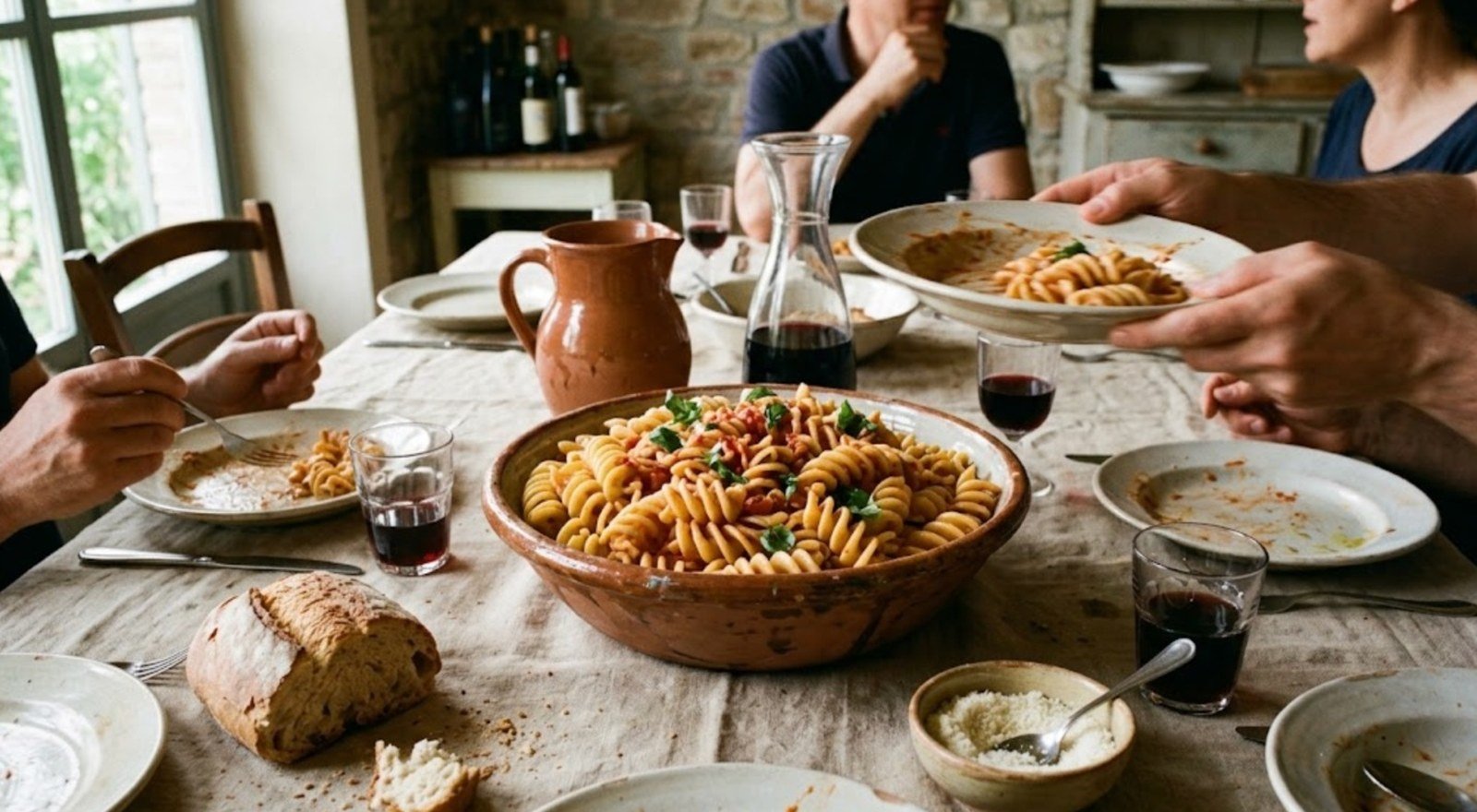
You know how to cook rotini. These are the ones a Rotini cooks at home.
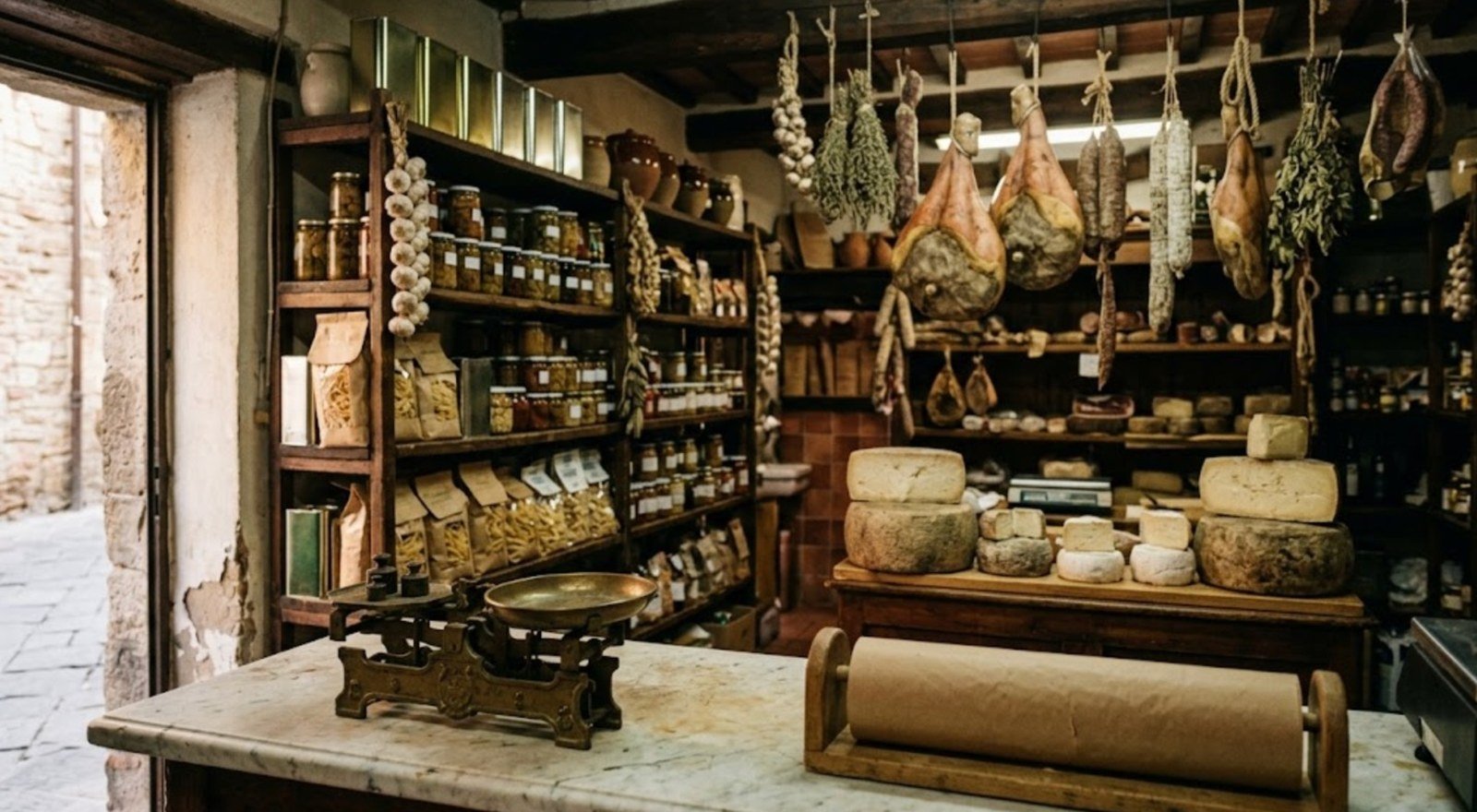
Rotini 1882 will be available in selected Italian delis and gourmet grocers in the United States.
Retailers, importers and restaurants: write to us for samples and the trade sheet.